
100% of electronic invoices issued on their own
From each payment in the scheduler to the electronic invoice in SIIGO with no human intervention. The accounting team stopped copying data from one platform to another.
Electronic invoicing·Reactive Move
How Reactive Move connected its appointment scheduler to SIIGO and gave its accounting team 4 full days a month back, on USD 3 a month of infrastructure.
Reactive Move invoices every payment that comes in through its scheduling platform, AgendaPro. With more than 1,000 payments a month, someone in accounting had to take each payment, create or update the customer in SIIGO (Colombia's accounting and e-invoicing platform) and issue the electronic invoice with DIAN, Colombia's tax agency, one at a time.
That work consumed about 4 full days a month, 32 hours, of the accounting team's time. At a reference salary of USD 750 a month (COP 3,000,000), that was roughly USD 150 a month, more than USD 1,800 a year, spent copying data from one platform to another instead of doing the company's accounting.
And because everything passed through human hands, the process carried the usual problems of manual data entry:
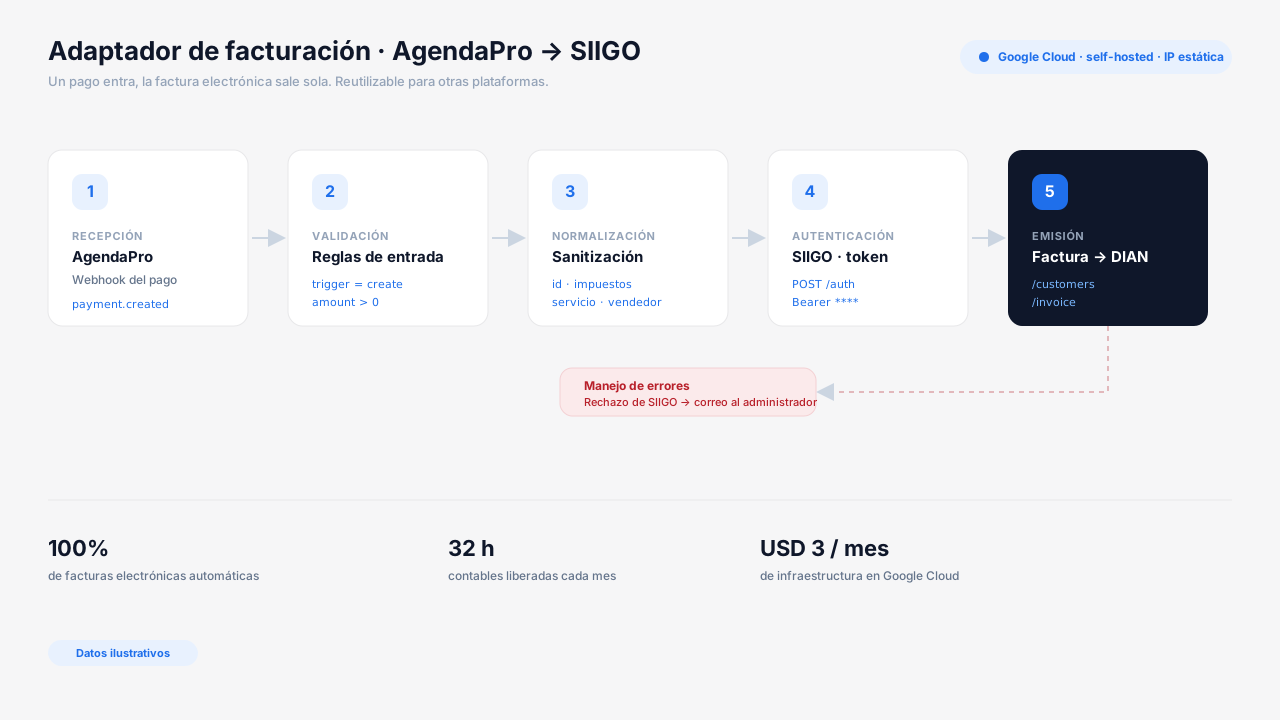
We built an integration adapter that connects the appointment scheduler to SIIGO and issues the electronic invoice on its own. Every time a payment is recorded, a webhook (payment.created) triggers the flow: we validate that it is a real payment with an amount greater than zero, normalize the data (ID number, taxes, service and salesperson), authenticate with SIIGO, create or update the customer and generate the electronic invoice, with nobody touching a keyboard. We designed it as a reusable piece: the same adapter can connect other scheduling or payment platforms to SIIGO.
Everything runs on our own infrastructure on Google Cloud instead of a subscription service, with a static IP so the webhook never drops and memory tuned for the free tier. Result: the cost of running the automation came down to about USD 3 a month.
From each payment in the scheduler to the electronic invoice in SIIGO with no human intervention. The accounting team stopped copying data from one platform to another.
The 32 hours a month that went into manual invoicing came back to the business. At the reference salary, that is about USD 150 a month, more than USD 1,800 a year (COP 7.2M), freed up for higher-value work.
We moved the flow from a subscription service to our own deployment on Google Cloud's free tier. The monthly cost of running the automation settled at about 3 dollars.
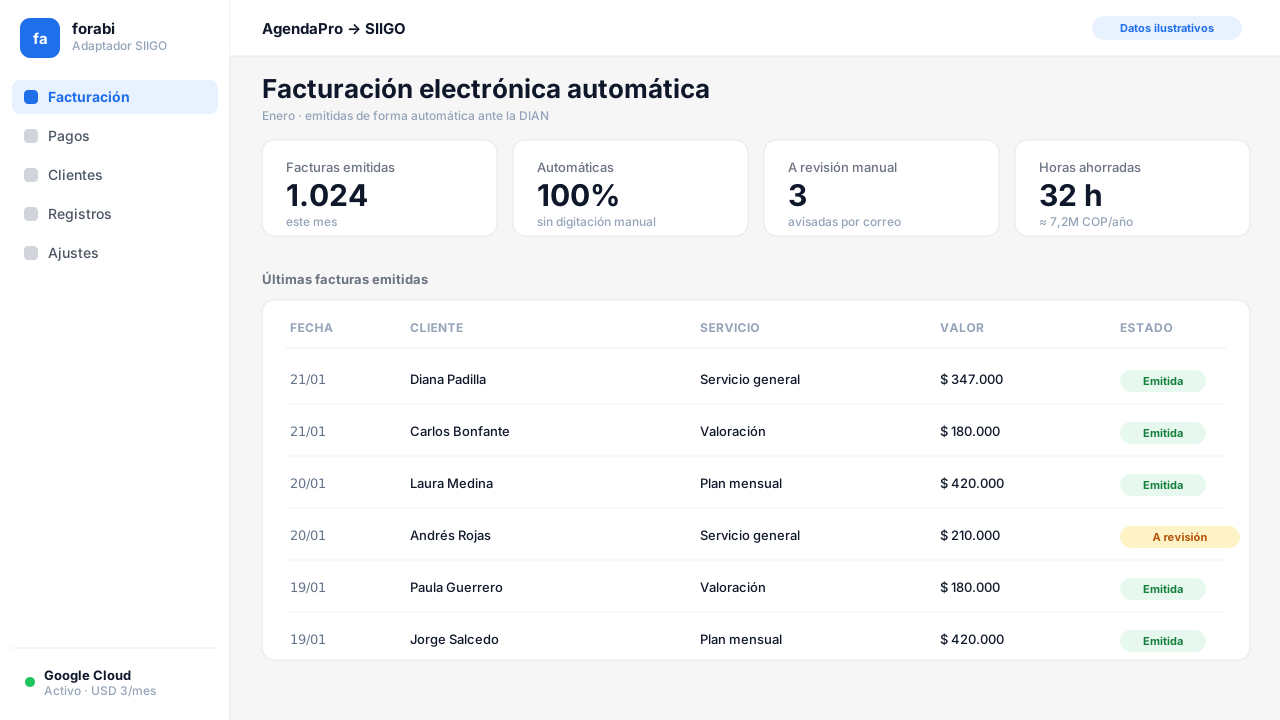
Reference images of the delivered product. The data shown is illustrative and does not correspond to real client or operational information.
We mapped the manual payment-by-payment invoicing process and where hours were lost and errors slipped through to DIAN.
We defined the validation rules and the data mapping between the scheduler and SIIGO, treating the adapter as a reusable piece rather than a one-off patch.
We implemented the webhook → validation → SIIGO flow (auth, customers, invoice) with email error handling, and deployed it on Google Cloud with a static IP and tuned memory.
We moved invoicing from the manual process to the automatic one and left the accounting team with only the cases that need review.
We monitor issuance, adjust rules when DIAN or SIIGO change, and reuse the adapter whenever a new integration comes up.